////////////////////
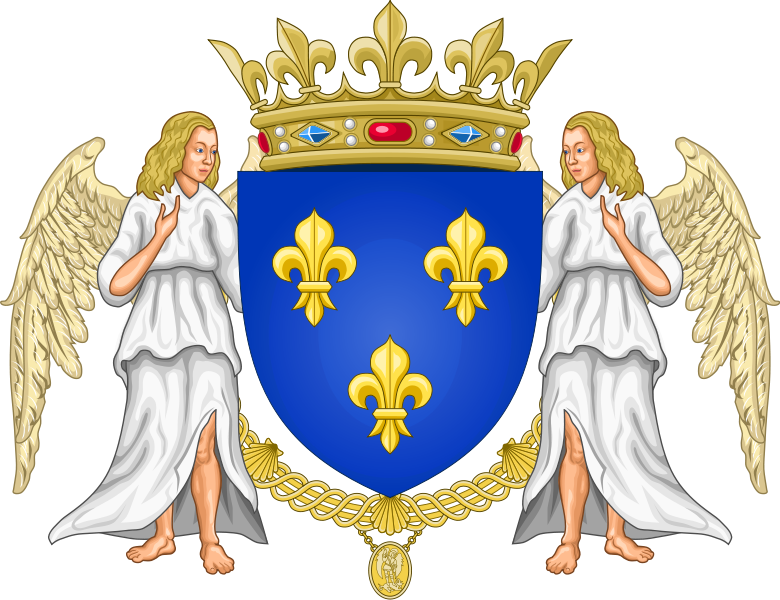
The House of Valois[1] (French pronunciation: [valwa]) was a cadet branch of the Capetian dynasty. They succeeded the House of Capet (or "Direct Capetians") to the French throne, and were the royal house of France from 1328 to 1589. Junior members of the family founded cadet branches in Alençon, Anjou, Burgundy and Orléans.
The Valois descended from Charles, Count of Valois (1270–1325), the third son of King Philip III of France (reigned 1270–1285). Their title to the throne was based on a precedent in 1316 (popularly known in the English-speaking world as the Salic law), which excluded females (Joan II of Navarre) as well as male descendants through the distaff line (Edward III of England), from the succession to the French throne
Valois Dynasty, the royal house of France from 1328 to 1589, ruling the nation from the end of the feudal period into the early modern age. The Valois kings continued the work of unifying France and centralizing royal power begun under their predecessors, the Capetian dynasty.
he House of Valois was a branch of the Capetian family, for it was descended from Charles of Valois, whose Capetian father, King Philip III, awarded him the county of Valois in 1285. Charles’s son and successor, Philip, count of Valois, became king of France as Philip VI in 1328, and thus began the Valois dynasty. The house subsequently had three lines: (1) the direct line, beginning with Philip VI, which reigned from 1328 to 1498; (2) the Valois-Orléans branch, which consisted of one member, Louis XII (reigned 1498–1515), son of Charles, duc d’Orléans, a descendant of King Charles V; and (3) the Valois-Angoulême branch, beginning with Francis I, son of Charles, count of Angoulême, another descendant of Charles V; it reigned from 1515 to 1574 and was succeeded by the Bourbon dynasty, another branch of the Capetians.

No comments:
Post a Comment